

Agentic AI & Autonomous Coding Systems in 2026: The New Engineering Workforce
Why engineering teams are moving from autocomplete copilots to autonomous multi-agent coding systems with self-healing pipelines in 2026.
Read article
Audit native modules for Fabric support; enable bridgeless in staging first; measure startup time and list scroll FPS before prod.
When rolling out changes related to React Native New Architecture in 2026, start with a two-week technical spike on the riskiest integration point. Document assumptions, measure baseline metrics, and define rollback before touching production traffic.
Name who owns the dependency audit. The New Architecture migration succeeds or fails on whether your third-party libraries support it, and that assessment has to happen before the plan is written, not during it.
The recurring failure is migrating without a performance baseline. Without measurements from before the change, you cannot tell improvement from regression, and every discussion becomes an argument about impressions.
The costly mistake is running the migration alongside a feature deadline. Give it its own window — interleaving the two makes it impossible to attribute any resulting bug to either.
Our architects offer a free 30-minute consultation — no sales pitch, just answers.
Why engineering teams are moving from autocomplete copilots to autonomous multi-agent coding systems with self-healing pipelines in 2026.
Read article
Why rigid tables and static forms are dying, and how generative software renders intent-driven micro-interfaces in real time in 2026.
Read article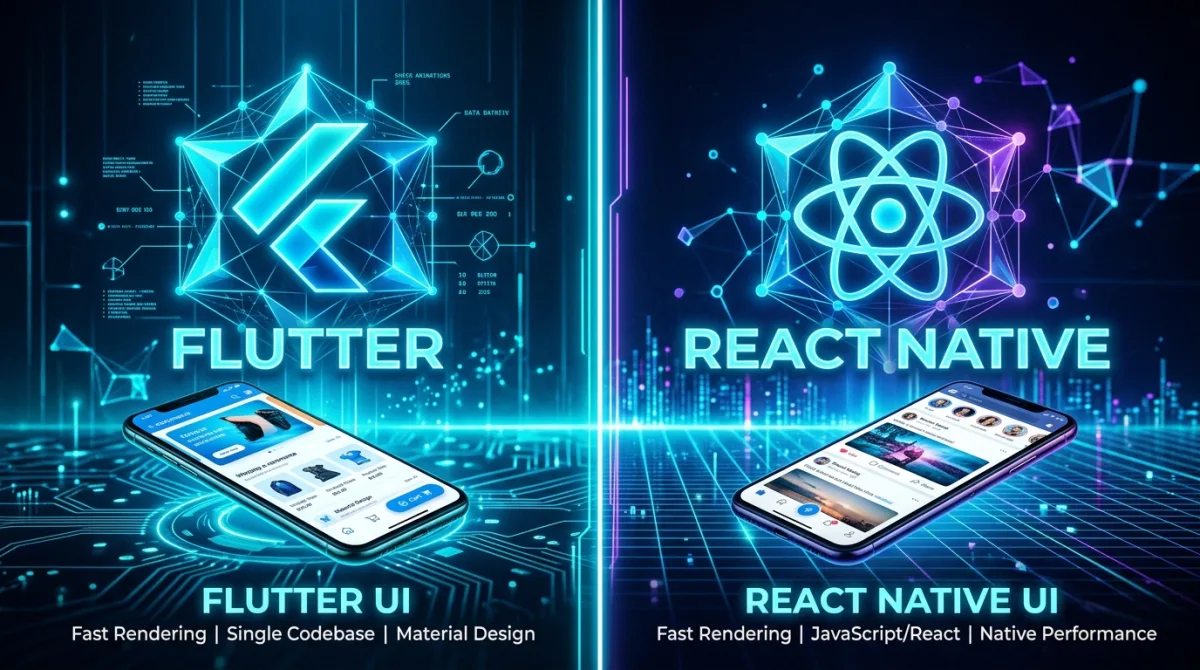
Flutter Impeller vs React Native Fabric benchmarked for 2026: frame rates, cold start times, memory use and AI bridging, with data from real builds.
Read article