

Agentic AI & Autonomous Coding Systems in 2026: The New Engineering Workforce
Why engineering organizations are transitioning from autocomplete copilots to multi-agent autonomous engineering pipelines.
Read article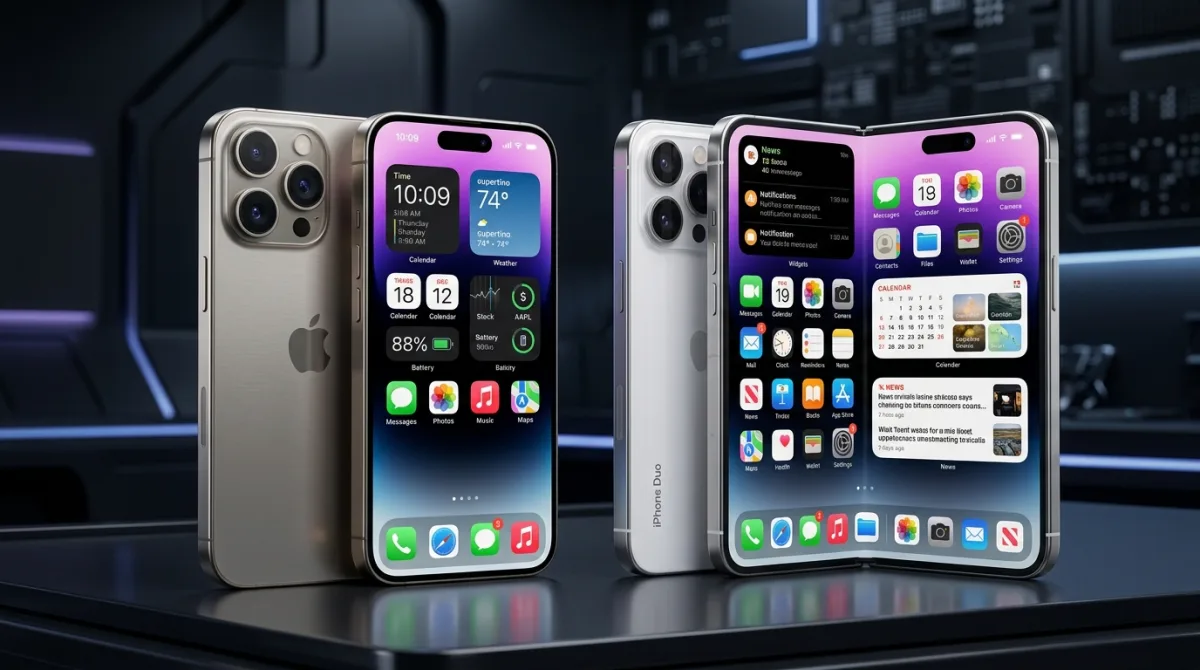
Apple has officially unveiled its most consequential hardware leap in a decade: the flagship iPhone 18 Pro alongside the revolutionary dual-folding iPhone Duo. Powered by the industry-first 2nm A20 Pro Bionic silicon and deep Apple Intelligence 2.0 integration, this generation represents a fundamental paradigm shift for mobile software engineers, product designers, and enterprise application architects.
For years, foldable smartphones struggled with visible screen creases, fragile mechanical hinges, and thermal bottlenecks. With the iPhone Duo, Apple has solved these mechanical dilemmas through an aerospace-grade titanium-liquidmetal composite hinge and a zero-crease Ultra-Thin Glass (UTG) 4.0 substrate.
| Specification | iPhone 18 Pro | iPhone Duo (Foldable) |
|---|---|---|
| Display Size | 6.3" & 6.9" ProMotion OLED (1-120Hz) | 6.1" Outer Cover / 8.1" Inner Dual OLED |
| SoC Processor | A20 Pro (2nm TSMC N2P) | A20 Pro Max (Dual Thermal Vapor Chamber) |
| Neural Engine (NPU) | 100 TOPS On-Device AI | 100 TOPS with Unified Memory Boost |
| Biometrics & Camera | Under-Display FaceID + 48MP Quad Prism | Sub-OLED FaceID & Dual Side Biometrics |
| Battery Life | Up to 34 hours video playback | 5,200 mAh Dual-Cell Silicon Carbon |
The A20 Pro is the world’s first mass-produced 2nm smartphone chip. By migrating to Gate-All-Around (GAA) nanosheet transistors, Apple achieves a 30% boost in multi-core compute alongside a 40% reduction in thermal dissipation.
The centerpiece of the A20 Pro is its 100 TOPS Neural Engine. Unlike prior iterations that relied on offloading heavy inference to Apple's Private Cloud Compute, the iPhone 18 Pro runs 7-billion parameter quantized multimodal LLMs directly on-device with sub-50 millisecond response latencies. This enables local real-time audio translation, generative UI rendering, and multimodal video parsing without consuming cellular data or compromising user privacy.
For mobile app developers, the iPhone Duo introduces Adaptive Fold Postures. Apps can no longer assume a static aspect ratio or rigid portrait/landscape dichotomy.
iOS 27 exposes new posture bindings through DevicePostureProvider. The device seamlessly alternates across four primary states:
Whenever Apple introduces a category-defining form factor (like the iPhone X notch, Dynamic Island, or Apple Vision Pro), early adopters who adapt their apps during launch week enjoy 4x to 10x higher organic App Store editorial feature rates.
If your business operates in SaaS, eCommerce, Healthcare, or Fintech, optimizing for foldable dual-screen workflows allows users to compare products side-by-side, sign contracts with Apple Pencil on the lower panel while reviewing clauses on the top, and conduct video consultations with unobstructed document notes.
At Devlex Infotech, our native iOS engineering teams have tested early Xcode 27 simulator toolchains and dual-hinge posture abstractions. We help startups and global enterprises:
Our senior iOS engineers build high-performance native apps tailored to Apple's latest hardware innovations. Small fixes start at $12, with dedicated developers ready to onboard within 48 hours.
Hire Dedicated iOS DevelopersApple's official retail availability for the iPhone 18 Pro begins in late September 2026, with the iPhone Duo rolling out across tier-1 markets in November 2026.
Yes, existing apps will run in single-screen compatibility mode. However, apps that have not implemented SwiftUI fold postures will display black letterboxing or miss out on dual-screen multi-tasking capabilities.
Refactoring an existing SwiftUI app for dual-screen fold postures typically takes 2 to 4 engineering weeks depending on screen complexity. Devlex provides rapid feasibility audits within 48 hours.
Talk to our mobile architects for a free 30-minute consultation on Apple silicon and foldable UX.
Why engineering organizations are transitioning from autocomplete copilots to multi-agent autonomous engineering pipelines.
Read article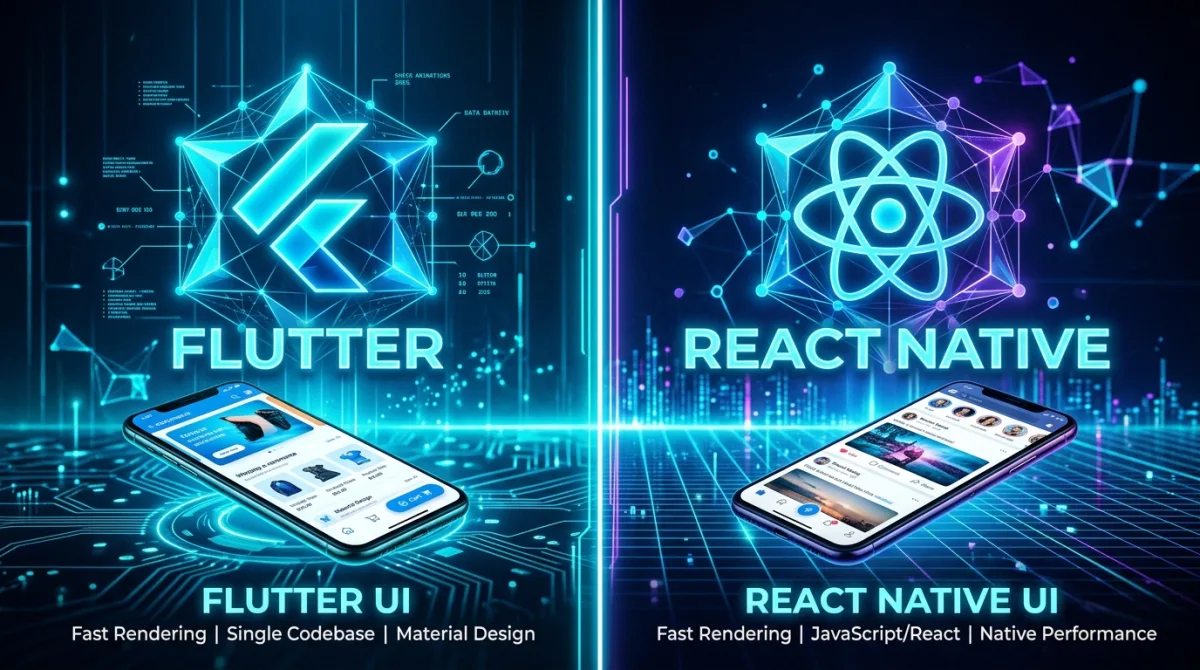
Direct GPU frame rendering, cold start measurements, and AI runtime integration benchmarks across iOS & Android.
Read article