
Starlink in India (October 2026 Update): Expected Pricing, Approval Delays, and Global Milestones

The concept sounds ridiculously easy: put a dish on your roof, run a wire to a wall socket, and get online. If your local Wi-Fi drops every time you take a client call, that setup feels like magic. But bringing that connection into a country like India involves a massive checklist of regulatory approvals.
That gap explains much of the latest Starlink news. In India, things have gotten pretty tense. Elon Musk has been publicly calling out the government for taking too long, and Indian officials have pushed back saying they have their own process to follow. Outside India, SpaceX has been busy on other fronts too, launching newer and more powerful satellites, signing up airlines for in-flight Wi-Fi, and building out a mobile connectivity business. [1–3, 7–9]
For readers trying to make sense of it all, three questions matter most: Can you actually order Starlink where you live? What would the complete service cost? And would it solve a problem your existing connection cannot?
This guide looks at the developments behind the headlines, with particular attention to India. It separates published announcements from company ambitions, and both from the claims circulating on social media.
Why Starlink is Attracting Attention This Week
Several stories have arrived close together, but they describe different stages of progress.
- In India: Starlink's readiness claims and Musk's criticism have brought the delayed launch back into the news. The government's latest statement describes security assessments as ongoing. [1–3]
- In the United States: An agreement dated 8 October concerns a proposed transfer of nationwide 800 MHz spectrum licences to SpaceX's Starlink Mobile business. The application describes a network combining satellite and terrestrial infrastructure. This is a proposed transaction requiring regulatory consent. [7]
- Aviation Expansion: American Airlines announced on 8 October that it intends to bring Starlink to its entire mainline fleet, with installations beginning in early 2027. [8]
- Starship Deployment: SpaceX's account of Starship Flight 14 says the 28 September mission delivered 26 Starlink V3 satellites to orbit. That is a recent deployment milestone, rather than another distant satellite concept. [9]
All of this shows something worth remembering: a company can be growing fast in some parts of the world and still be stuck waiting for the green light in another country.
Has Starlink Launched Commercially in India?
The sources checked for this article do not establish a general commercial launch in India as of 10 October 2026. A confirmed nationwide consumer launch date was also not found.
The clearest official account is the Ministry of Communications statement published on 8 October. It says three satellite-service licensees were undergoing security assessments and were at broadly similar stages. After completing that assessment, an operator could proceed to seek spectrum assignment. [1]
That is worth keeping in mind every time you see a headline saying Starlink got approved. Getting a licence, building out infrastructure and actually being allowed to sell service to regular customers are three different things.
For a household, the useful evidence will be an official offer available at its address, with applicable service terms, an actual price and an activation process. An announcement about regulatory progress does not provide those things on its own.
Why the Musk–Ambani Dispute Needs Careful Reading
On 9 October, Reuters reported that Musk accused Mukesh Ambani of blocking Starlink from entering India. Telecom Minister Jyotiraditya Scindia responded by rejecting the monopoly claim. According to the report, Musk did not provide any proof to back up what he said. [2]
It is important to remember who is saying what here. When a company founder makes an accusation, that tells you what he thinks. That doesn't reveal the real reasons behind bureaucratic hold-ups in Delhi.

People on Twitter love turning routine telecom paperwork into a Bollywood-style battle between tech billionaires. It gets clicks, but ignores the messy legal compliance happening behind closed doors.
Are the ministry's security checks moving too slowly? Are the local data storage rules fair? Those are genuine questions worth discussing. But getting real answers requires looking at policy documents, not picking sides in a Twitter argument.
What Starlink Says It Has Prepared for India
Financial Express reported on 7 October that Starlink executive Lauren Dreyer described the company's India infrastructure and operational preparations as complete. Her account included around 20 ground stations and India-specific arrangements intended to meet local security and data requirements. [3]
Don't confuse company PR statements with official government clearance stamps.
Setting up twenty ground stations across India is great for network routing, sure. But server hubs don't help much if you can't get a repair guy to your house when lightning strikes your dish. The actual customer experience will live or die by local customer support.
Where Jio and Airtel Fit into the Story
Headlines love painting SpaceX and domestic telecom giants as bitter enemies, but the real business dynamic is far messier.
Back in March 2025, Airtel actually signed an initial partnership with SpaceX to explore distributing Starlink kits across India. It discussed equipment distribution, business services and connections for communities, schools and health centres. The agreement was subject to SpaceX receiving its own authorisations. [4]
Jio announced its own agreement the following day. Its release described retail and online distribution, along with support for installation and activation, again conditional on the necessary authorisations. [5]
This is a good example of how competition and partnership can exist at the same time. A telecom company serves all kinds of customers with all kinds of needs. Someone in a city apartment, a construction crew at a remote site and a rural school do not all need the same type of internet connection.
The agreements do not establish that kits are currently available in every store. Nor should the current dispute be treated as proof that those arrangements have ended. Customers need a current offer from the relevant provider before making either assumption.
What is the Confirmed Starlink Price in India?
A reliable, current India consumer tariff could not be verified from the accessible sources reviewed for this article.
The widely repeated figures of Rs 8,600 per month and Rs 34,000 for hardware need particular care. They appeared on the India website in December 2025, but Starlink subsequently said a configuration error had exposed dummy test data. NDTV's 9 December report records the clarification. Never treat those leaked numbers as confirmed October 2026 rates. [6]
The plain truth: nobody knows the final retail fee until Starlink publishes its live checkout page.
Estimated First-Year Cost Framework
Once real bookings start, don't just look at the monthly recharge. Add up the true twelve-month expense:
First-Year Cost = Hardware dish kit + shipping & roof mounting brackets + 12 monthly subscription bills + 18% GST
SpaceX might offer launch discounts or free delivery down the line, but always budget for the absolute worst-case sticker price.
Find out beforehand what happens if trees or tall buildings kill your reception. Is there a return window? Who pays return shipping? Is installation refundable? What support is available locally? These questions can matter as much as a discount advertised on the order page.
How Starlink Works in Everyday Terms
Normal broadband travels through underground glass cables dug into roads. Starlink skips physical trenches entirely, pinging radio waves directly to a swarm of small satellites flying overhead. Those satellites bounce your data down to earth stations, routing traffic back to the regular internet. [10, 11]
Since these birds orbit only 550 km up rather than 36,000 km in deep space, radio lag drops down to 25 or 30 milliseconds. That keeps latency low, which is why video calls and games don't suffer from that painful 2-second audio delay common on older, higher satellite TV networks. [10]
You don't need an astrophysics degree to figure out if this helps you. Just look at what is currently broken with your internet. Is the problem that no provider reaches the property? Does the mobile network become unreliable in the evening? Or is the Wi-Fi simply poor in one room?
Those problems have different solutions. Changing the internet provider will not automatically fix a badly positioned router or a room separated from it by thick walls. Starlink's own troubleshooting guidance includes checks for local Wi-Fi, as well as the satellite link. [12]
The V3 Satellite Update: More Network Capacity, with Important Qualifications
SpaceX's September flight report describes the first delivery of 26 Starlink V3 satellites by Starship. Starlink's V3 technical material says the design supports 1 terabit per second of downlink capacity and 160 gigabits per second of uplink capacity per satellite. [9, 13]
These are network-capacity figures. They are not the speed of an individual household subscription.
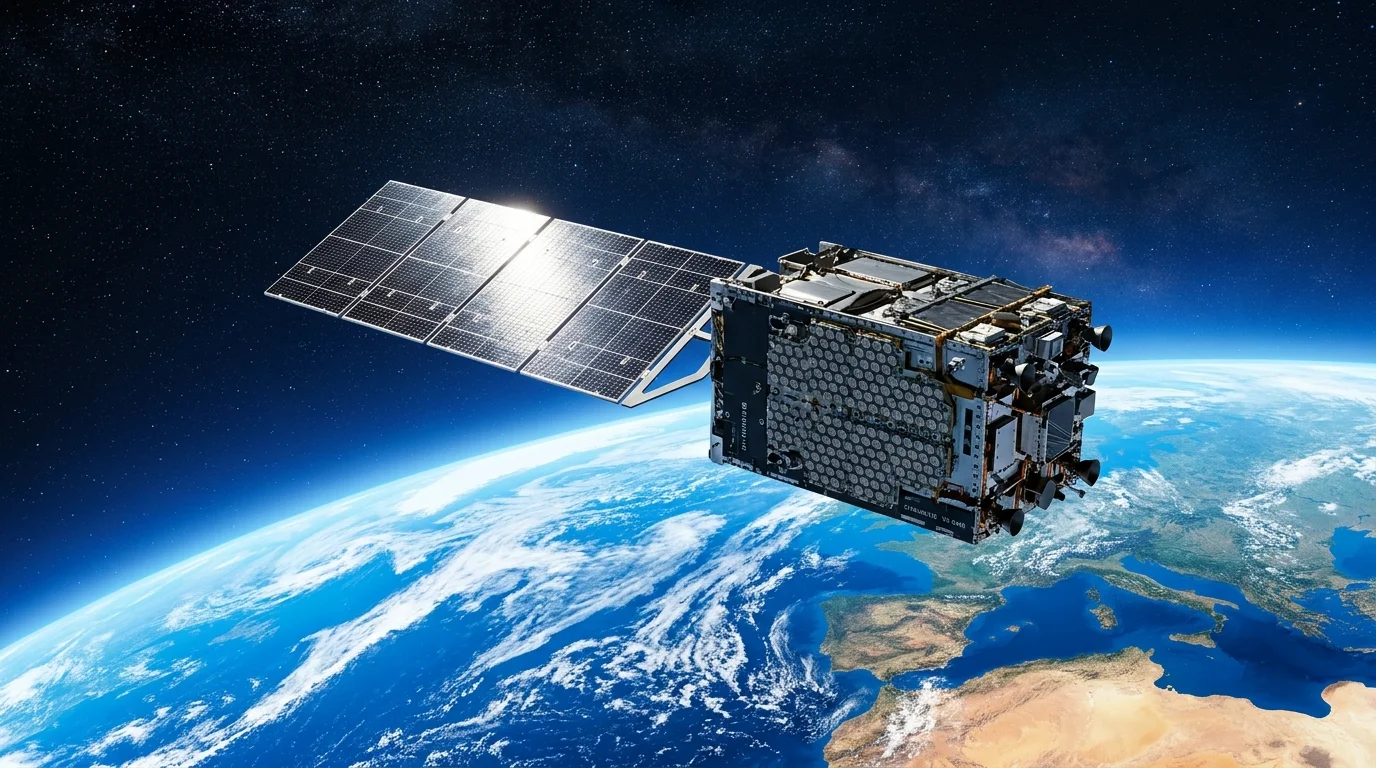
More satellites in the sky is like widening an express highway from two lanes to six. It lets more cars travel without bumper-to-bumper jams, but your scooter still has its own top speed limit. Don't expect 26 new satellites in orbit to magically double your download speeds overnight. Readers should look for location-specific performance evidence and updated plan terms before assuming a particular improvement at home.
For the longer term, V3 matters because capacity is central to Starlink's ability to serve more people. For an individual purchase today, the available local product still deserves more weight than the largest number in a technical announcement.
Starlink Mobile is Becoming a Larger Part of the Story
SpaceX's October spectrum application outlines a hybrid mobile network using both satellites and ground infrastructure. It seeks approval for the transfer of licences covering up to 14 MHz of paired spectrum in the 800 MHz band from a Grain Management affiliate. [7]
That tells us something about the direction of the business: Starlink is pursuing a role beyond a terminal installed at a property. It does not establish a completed nationwide rollout, a final retail offer or an Indian mobile launch.
The existing satellite-to-phone service also needs to be understood on its own terms. T-Mobile describes T-Satellite as providing texting and selected satellite-ready applications on compatible devices in supported outdoor areas with a view of the sky. Its customer information warns that satellite service can be limited, delayed or unavailable. [14]
Residential broadband and satellite-to-phone connectivity therefore need separate purchase decisions. A family looking for home internet should examine the terminal, plan and installation. Someone interested in coverage away from cell towers should examine the supported phone, carrier, location and available functions.
A claim that every phone will receive unrestricted satellite broadband anywhere indoors goes further than the evidence reviewed here supports.
Airline Wi-Fi Shows Another Side of Starlink's Expansion
American Airlines' new plan covers more than 1,000 mainline aircraft, including Airbus and Boeing jets. Its announcement says installation will begin in early 2027. It describes a Performance Aero Terminal capable of speeds up to 1 Gbps per terminal. [8]
That is a planned fleet rollout. It does not mean every American Airlines flight already has Starlink, and the quoted terminal speed is not a dedicated connection promised to each passenger.
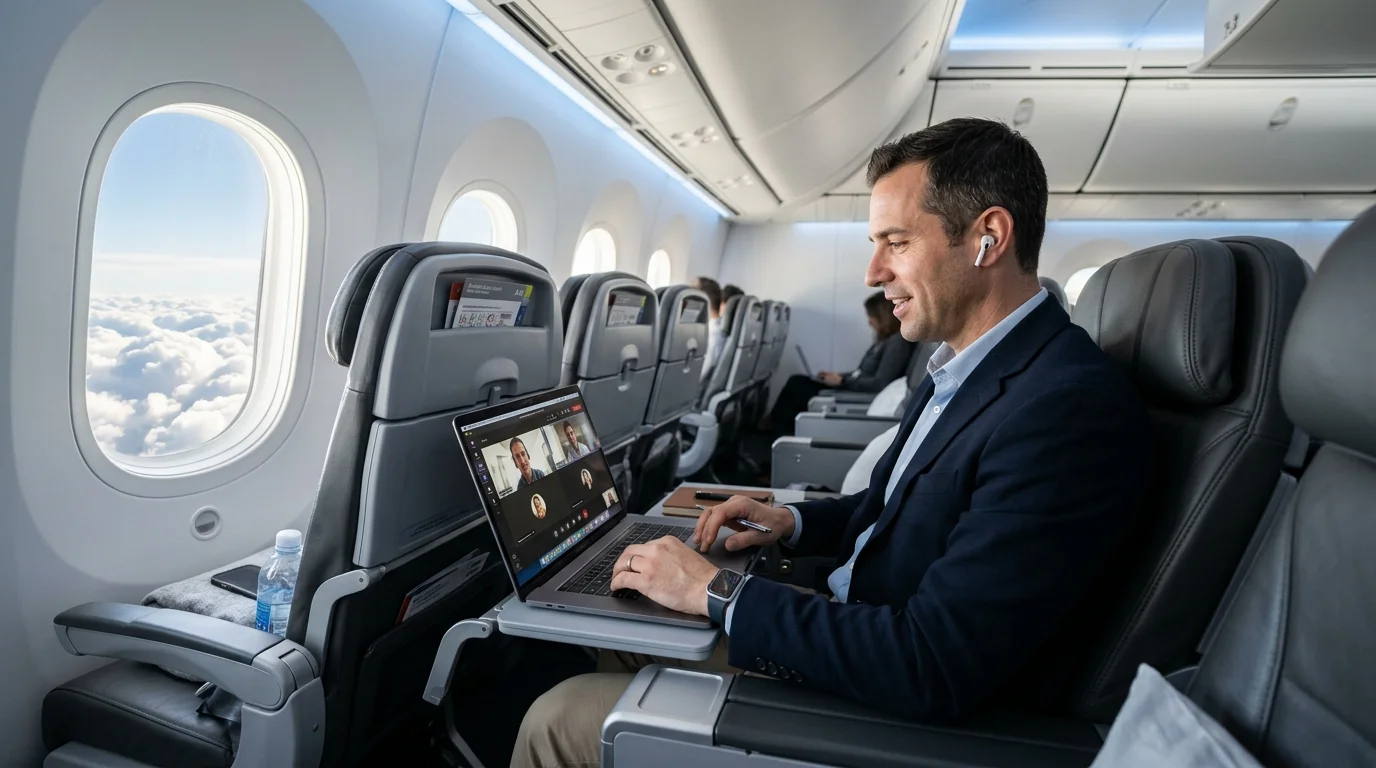
For travellers, the useful question will be whether their particular flight has the equipment and what access conditions apply. Fleet announcements can create expectations well before the last aircraft is fitted.
For Starlink, aviation illustrates how the same broad network can serve very different customers. A passenger cabin has installation, certification, support and shared-demand considerations that a household does not. It would be misleading to use an airline specification as a forecast for an Indian residential package.
There was also news from Venezuela this week. Reuters reported on 10 October that the Venezuelan government gave Starlink permission to operate there. That is a green light for one specific country. If you are in Venezuela and interested, check the actual ordering page for your address before assuming you can sign up right away. [15]
Who Could Benefit Most from Starlink in India?
The strongest use case starts with a real connectivity gap.
Unless your current internet drives you crazy every day, you probably don't need this.
Say you run a remote guest lodge up in the hills—maybe near Munnar or Coorg. Travelers can make a phone call on the drive up, but the second they walk inside the rooms, signal bars vanish completely. Or take a three-person boutique design shop out in a semi-rural district. Right now, their staff literally take a local bus into the nearest town just to upload client video footage to Google Drive. If satellite broadband gets greenlit, runs reliably at those exact coordinates, and stays within a reasonable budget, it will completely transform how those places do business.
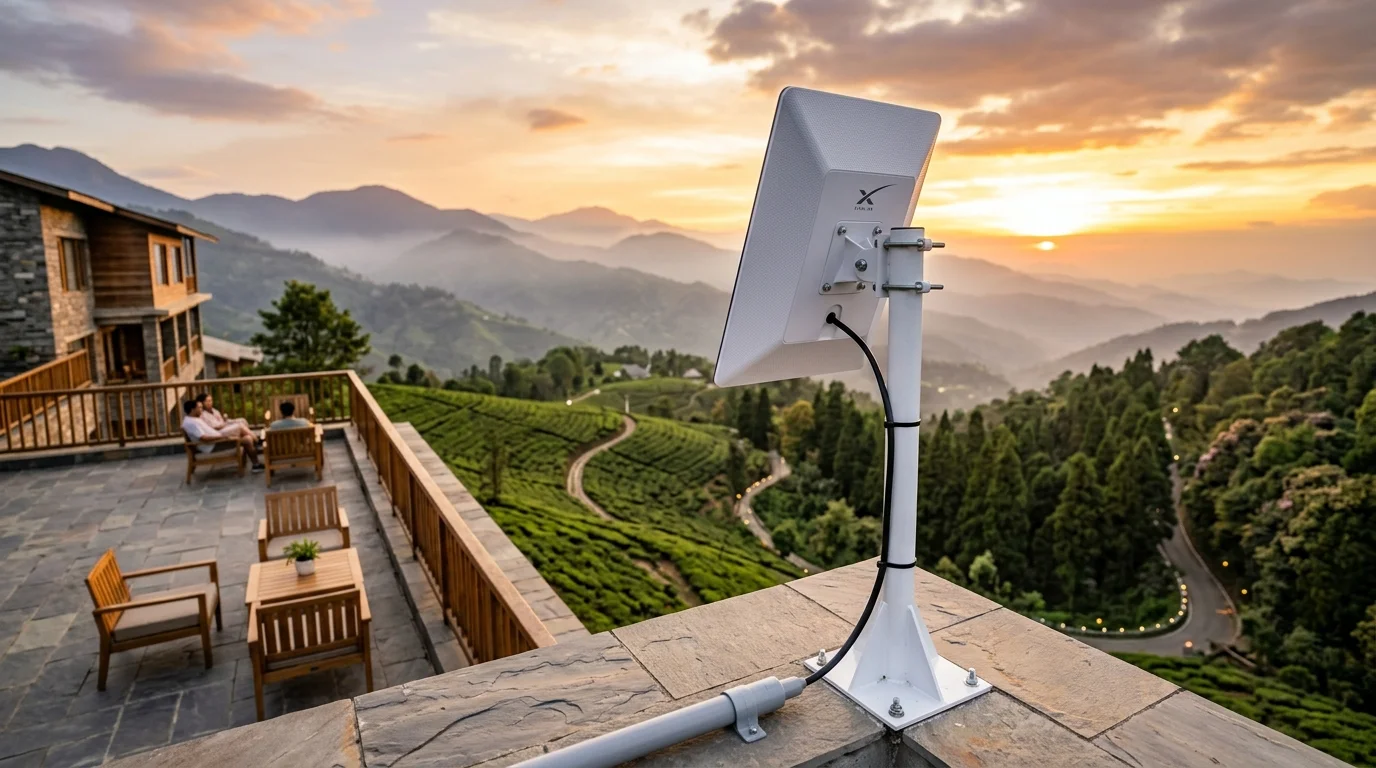
Of course, these are just common sense use cases, not proof that Indian users are already running the kit today.
Remote village schools and local panchayat clinics bring a whole different set of headaches. Sure, one satellite dish could power an entire schoolhouse. But keeping that link running takes a lot more than just unboxing equipment. Who pays for the monthly electricity? Who knows how to reboot or fix the dish when a cable snaps? How do teachers stop 50 students from choking the bandwidth all at once? That explains why Airtel's tie-up announcement pointed straight toward village schools and rural public health centres as experimental test grounds. [4]
If your business struggles outside a major city, try calculating the actual damage in rupees. How many billable hours does your crew waste each week watching upload spinners? How many zoom calls with high-paying clients failed this past month? Put a hard number on the frustration. Once you see the true cost of dropped calls, figuring out whether a satellite bill makes financial sense becomes a lot simpler.
Don't waste cash on satellite kit just to look cool to your neighbors. If your home broadband already streams movies and takes calls without lag, getting a dish changes literally nothing for you.
Why Raw Speed Numbers Lie
Everyone brags online when Ookla clocks 150 Mbps, but five seconds of top speed doesn't mean your connection works reliably all day.
SpaceX admits right in their FAQ that evening congestion throttles traffic. Throw in storm clouds, thick mango trees, or a router tucked behind a wall, and speeds tank fast. [12, 16]
Test the stuff you actually use for work instead of running random internet gauges. Join an office meeting. Upload a big presentation. Turn on the cricket match on your TV and see if your Slack call breaks up.
I'd take an unbreakable 20 megabit connection over a flaky 200 megabit line any day.
A cool speed test from someone living in Berlin or California doesn't mean a thing for an Indian terrace under heavy monsoon skies.
Real-World Setup Headaches: Rain, Power, and Roofs
The dish needs an open patch of clear sky because these satellites zip past fast. You can use the Starlink app camera to scan your roof for solar panels, water tanks, or tree limbs before drilling holes. [11]
Forget about setting this up on a standard flat balcony. You basically need roof access. Figure out how you'll route the thick cable down to your bedroom, and confirm your RWA or landlord actually lets you bolt stuff to the roof.
The outdoor terminal handles bad weather, but dark monsoon stormclouds and heavy downpours will definitely cause drops. If your town gets hammered by monsoon rains every July, keep that in mind. [17]
And remember power cuts. The equipment pulls constant power, meaning zero internet when the grid dies unless your inverter battery has enough backup juice to keep both the dish and router alive.
For offices: simply screwing hardware to the terrace won't save you during an emergency. Walk your staff through what to do when your primary internet cuts out. Does your network router fail over automatically? Has anyone tested the satellite backup this month? Having extra gear sitting on your terrace does nothing if your team doesn't know how to switch connections when an outage strikes.
What People on Reddit and Twitter are Actually Saying
The public material reviewed for this article repeatedly raised three questions: whether satellite internet would be affordable, whether India needs another connectivity option, and how authorities should handle security concerns. The sample included Reddit discussions dated 8–10 October, indexed Facebook news coverage and broader YouTube and LinkedIn discussion. [18–21]
These online threads certainly do not speak for the entire country.
Yet for a warehouse manager in an industrial belt or a camp operator in Ladakh, satellite internet sounds like an absolute game-changer. Everyone views this through their own daily internet struggles.
Browse social media to see common complaints, but never treat Reddit comments as official policy. Stick strictly to telecom ministry notices for real launch information.
What Matters Right Now
Ignore the noise online and track four actual steps: DoT security approval, clear pricing in INR on Starlink's site, a functional PIN code check, and a local replacement warranty setup.
Worldwide, keep an eye on how those V3 satellites hold up in real skies, and see whether phone carriers actually roll out satellite texting without extra fees. Real user feedback always beats hype.
Once Indian users finally start receiving delivery boxes, read the early user reviews carefully. Note where the reviewer lives, their dish mount setup, the time of day they ran tests, and whether the link held up through storms.
Starlink is genuinely exciting for remote places where cable companies will never dig fiber trenches. But whether it makes sense for your own home or business boils down to simple math: how much it costs every month, and how well it stays online at your house.
Commonly Asked Questions
Has an official India launch date been announced?
Not yet. As of October 2026, the government hasn't cleared a public start date, and security checks are still in progress. [1]
Are those leaked prices of Rs 8,600 a month and Rs 34,000 for the kit real?
Definitely not. SpaceX clarified that those figures appeared temporarily on its portal because of a dummy test data glitch during internal site configuration. [6]
Will Starlink work directly on my phone?
Currently, direct smartphone links are limited to emergency text messages and simple SOS notifications under clear skies, requiring supported phone hardware and partner telecom network arrangements. [14]
Is an open sky view mandatory?
Yes. Overhead obstacles such as tree branches, adjacent towers, or roof pillars will interrupt the radio connection. You can check your proposed spot ahead of time using the obstruction test in the mobile application. [11]
Does the new V3 satellite announcement mean every customer gets 1 Tbps speed?
No. That 1 Tbps figure refers to the total network capacity of the satellite itself up in space, not the download speed delivered to an individual home. [13]
Can I buy a Starlink dish abroad and bring it into India to use right now?
No, you shouldn't count on that. Starlink ties hardware and service plans to specific registered countries and roaming zones. If the service isn't officially licensed and active in an area, foreign hardware won't work. [22]
Source References
All source material verified as of 10 October 2026.
- Ministry of Communications / PIB, 8 Oct 2026. Official statement on satellite authorisation process and ongoing security assessments.
- Reuters report, 9 Oct 2026. Reporting on Musk's comments and government response.
- Financial Express, 7 Oct 2026. Lauren Dreyer's comments on India infrastructure readiness.
- Bharti Airtel, 11 Mar 2025. Official SpaceX agreement release.
- Jio Platforms, 12 Mar 2025. Official release on SpaceX partnership and distribution plans.
- NDTV / IANS, 9 Dec 2025. Starlink's clarification regarding the website pricing error.
- SpaceX 800 MHz Licence Transfer Narrative, 8 Oct 2026. FCC filing document.
- American Airlines, 8 Oct 2026. Fleet-wide Starlink installation announcement.
- SpaceX, 28 Sep 2026. Starship Flight 14 mission summary.
- Starlink Technology Overview. Low Earth orbit satellite network details.
- Starlink Help Center. Setup and obstruction checker guide.
- Starlink Help Center. Handling intermittent Wi-Fi drops and router checks.
- Starlink V3 Satellite Technical Specifications. Updates & technical specs.
- T-Mobile. T-Satellite coverage and device terms.
- Reuters, 10 Oct 2026. Venezuela authorizes Starlink operations.
- Starlink Help Center. Peak hours and congestion guidance.
- Starlink Help Center. Operating in extreme weather conditions.
- Reddit community discussions, 8–10 Oct 2026. Public reader sentiment on satellite broadband.
- The Hindu, 9 Oct 2026. Video coverage on regulatory debate.
- Baaten Bazar Ki, YouTube coverage. Industry analysis.
- LinkedIn industry analysis by Anuj Baid. Industry perspective.
- Starlink Help Center. Geographic limitations and account location rules.
Building next-generation infrastructure or IoT connectivity?
Devlex Infotech designs robust enterprise architectures, IoT fleet management systems, and hybrid cloud networks for scaling businesses.
Talk to Our Solutions EngineersNeed high-reliability cloud or network software?
Consult with our cloud and systems architects to design resilient digital infrastructure.